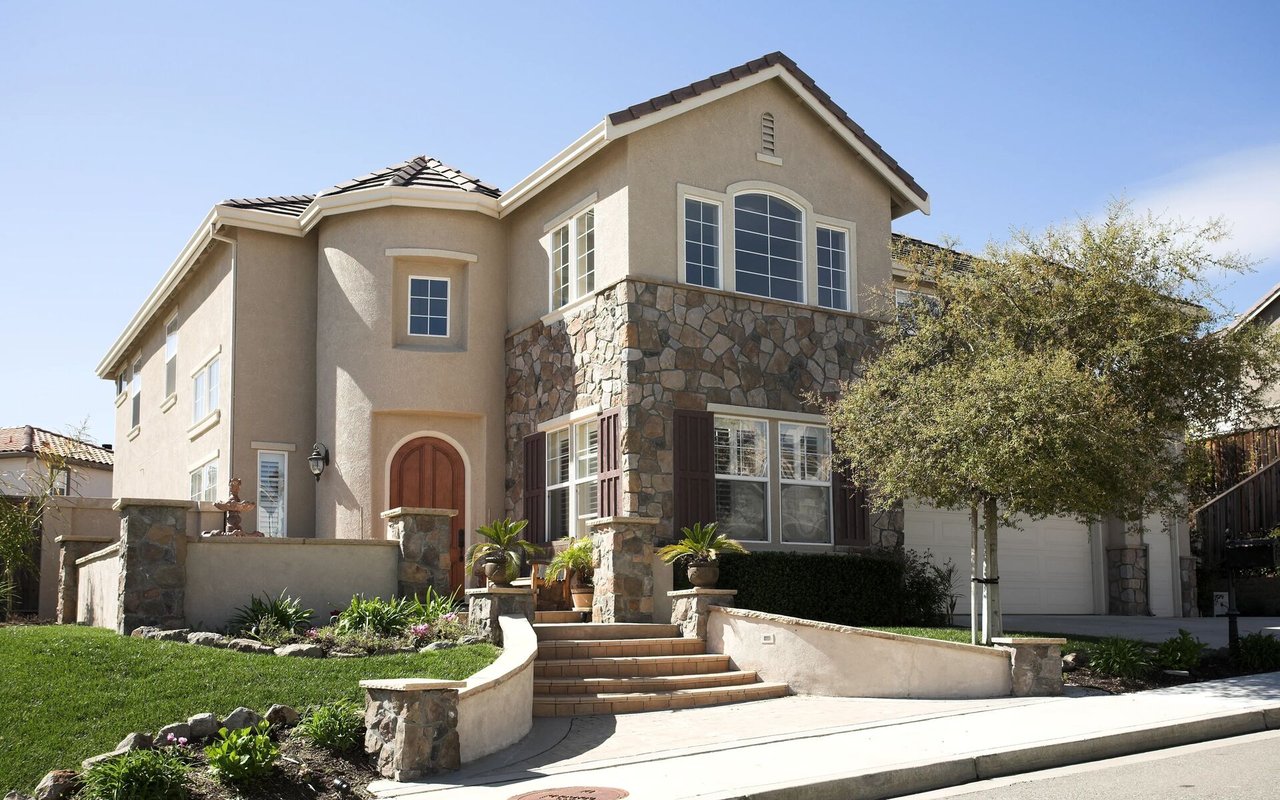
What does it actually cost to own a home in Coto de Caza right now? Not the number on the listing sheet. The one that shows up a few weeks later, when the insurance quote comes back.
Ninety-nine percent of properties in Coto de Caza carry some level of wildfire exposure over the next 30 years, according to First Street's risk data as reflected in current property records. That figure has always been true of a community built into the canyons and foothills east of Rancho Santa Margarita. What changed is that the state finally caught up to it on paper, and the insurance market caught up to the state.
What the 2025 Remap Actually Moved
In March 2025, the California Department of Forestry and Fire Protection released updated Fire Hazard Severity Zone maps for Local Responsibility Areas across Southern California, the first comprehensive revision of this scale in years. Orange County announced the update publicly in May 2025, and the practical effect was straightforward: thousands of parcels that had never been flagged before landed in a High or Very High zone, and parcels that were already flagged moved up a tier.
The communities absorbing most of that shift are the ones you would expect given the terrain. Coto de Caza sits in that group, along with Trabuco Canyon, Foothill Ranch, the San Clemente hills, and portions of Rancho Santa Margarita, Laguna Niguel, and the Irvine foothills. According to Citizen Portal, Rancho Santa Margarita's city council had to adopt an ordinance covering roughly 70 percent of the city just to bring its own map into compliance with the state's recommendation. Local jurisdictions can only raise a hazard designation from what the state recommends, never lower it, which is why the new lines moved in one direction across South Orange County's canyon communities.
A Fire Hazard Severity Zone rating measures the land: slope, brush density, wind corridors, fire history. It says nothing about whether a specific roof or a specific street is about to burn. What it does is feed directly into how insurers price the policy on that address, and that is where the real disruption to a Coto purchase or sale is showing up.
Same Street, Two Different Bills
The state's three tiers, Moderate, High, and Very High, set the baseline. Insurers then layer their own property-level model on top, commonly built on something like Verisk's FireLine scale, which scores brush density, slope, and how easily a fire truck can actually reach the structure. Two homes a block apart in Coto de Caza can land in very different brackets depending on what sits behind them, not what sits in front.
That is the part a median price can never show a buyer. A home priced at the community median could be significantly cheaper or more expensive to insure than the house next door, and the only way to know is to run the quote against the specific address, not the neighborhood.
The Policy Stack Nobody Puts on the Listing Sheet
For an increasing share of homes in these zones, the standard admitted market is no longer an option, and the fallback is the California FAIR Plan, the state's insurer of last resort. As of June 2026, the FAIR Plan covered more than 696,000 properties statewide, up about 8 percent in just the prior nine months. A FAIR Plan policy only covers fire, lightning, and internal explosion, so most lenders require a Difference in Conditions policy layered on top to restore liability, water, and theft coverage. That DIC wrap typically adds another 25 to 60 percent on top of the FAIR Plan premium itself.
Then there is the timing. A rate increase is set to take effect across the FAIR Plan, with higher-risk policyholders seeing increases above the average and a smaller share seeing modest decreases. For a Coto de Caza estate insured above the FAIR Plan's $3 million dwelling cap, which FireRisk.ai identifies as the program's maximum dwelling coverage, the stack gets more complicated still, since anything above that limit needs a separate excess-dwelling policy from the surplus lines market.
Rough statewide bands by risk tier give a sense of where a given Coto home might land, though every quote is address specific:
| Property profile | Typical annual premium |
|---|---|
| Upscale suburban, moderate zone, admitted carrier | $3,500 to $8,500 |
| High or Very High zone, admitted placement | $5,500 to $18,000+ |
| FAIR Plan plus DIC, distressed risk | $7,500 to $30,000+ |
Wildfire hardening, a Class A roof, ember-resistant vents, and a cleared five-foot Zone 0 perimeter, can shave roughly 14 percent off the wildfire portion of a FAIR Plan premium, and similar documentation can pull a property back toward the admitted market over time. It softens the number. It does not erase the gap between tiers.
What It Does to the Monthly Number
Coto de Caza's median list price sat at $2.29 million in September 2026, essentially flat compared to a year earlier, while the median sale price over the prior three months ran closer to $1.9 million, down about 9 percent year over year. A qualifying household at that list price, with 25 percent down, needs roughly $12,200 a month in total housing cost to keep that payment at 35 percent of income, which works out to about $420,000 in annual income.
Insurance sits inside that monthly number the same way property tax does. Move from the middle of the admitted-market band to the middle of the FAIR Plan plus DIC band and the gap runs close to $1,000 a month, before the rate increase widens it further. A lender counts that cost against a buyer's debt-to-income ratio just as it counts the mortgage payment. A home that pencils out on price alone can stop penciling out once the actual quote comes back.
Handling It Before Escrow Gets Tight
California's Natural Hazard Disclosure Statement, required under Civil Code section 1103, flags whether a property sits in a Very High Fire Hazard Severity Zone, and According to TSM Insurance, state law separately requires insurers to give at least 75 days written notice before a non-renewal. Neither of those protections tells a buyer what the replacement policy will actually cost.
The practical sequence that keeps a Coto de Caza transaction on track looks like this. A seller gets ahead of the insurance conversation before listing, checking whether the home's current policy is admitted-market or already FAIR Plan, and whether a nonrenewal notice is anywhere on the horizon. A buyer requests an insurance quote in the first week of escrow rather than the last, and a FAIR Plan plus DIC stack that satisfies the lender still needs to be priced and budgeted before the loan contingency comes off. Anyone financing near the top of Coto's price range confirms whether the dwelling limit they need crosses the FAIR Plan's $3 million cap, because that changes which market they are shopping in entirely.
Why the Map Doesn't Stop at the Guard Gate
This is not a Coto de Caza problem in isolation. The same 2025 remap reached into Trabuco Canyon, parts of Rancho Santa Margarita, and the hillside sections of Laguna Niguel and San Clemente, while the core coastal housing stock in places like Newport Beach and Dana Point sits largely outside the newly expanded High and Very High zones. A buyer comparing a canyon-adjacent home against a coastal one is not just comparing school access or commute distance. They are comparing two different insurance markets, and the median price for either neighborhood will not tell them which one they are stepping into.
A Few Direct Questions
Does a High or Very High rating mean a Coto de Caza home can't sell? No. It changes the insurance options and the cost, not the ability to close. Homes in these zones are financed and sold every week in South Orange County, with the right insurance plan built into the escrow timeline early.
Can hardening a home actually move the needle on premium? Documented mitigation, a Class A roof, ember-resistant vents, and a cleared Zone 0 perimeter, can lower the wildfire portion of a FAIR Plan premium by roughly 14 percent and can also help move a property back toward admitted-market eligibility over time.
What happens if a seller's policy is non-renewed while the home is on the market? State law requires at least 75 days written notice before a non-renewal takes effect, which gives a seller time to shop for replacement coverage and disclose the situation honestly rather than have it surface during a buyer's loan approval.
Insurance has quietly become part of the underwriting on every Coto de Caza transaction, not a footnote to it. If you are weighing a purchase or a sale here and want the real number worked through before you write an offer or set a list price, The Enyeart Group can walk through what your specific address is actually facing.
This article is general information, not legal, tax or financial advice. Consult a qualified professional about your situation.